
Cake Maker Fun Cooking Games
Phone Games StudioRole Playing
3.84.00 Reviews
- Version
- 2.0
- Installs
- 1.00M
- Age Rating
- Everyone
Screenshots







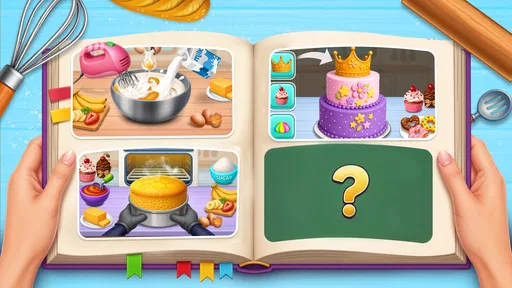
Our Review of Cake Maker Fun Cooking Games
 Analysis by Appyee
I spent time with Cake Maker Fun Cooking Games as a light role-playing game built around preparing and decorating cakes. Its appeal is easy to understand: instead of fighting enemies or managing a complicated character, you work through a cheerful baking activity and turn a plain cake into something more personal. That makes it a natural fit for short play sessions, younger players, and anyone who prefers creative tasks over pressure-heavy challenges.
The game is free, carries an Everyone age rating, and comes from Phone Games Studio. It has reached over one million installs and holds a 3.8 average from around 885 ratings, which suggests that many players find the basic idea enjoyable while the experience may not satisfy everyone equally. I think that is a fair picture. The central activity is approachable, but its value depends heavily on whether you enjoy simple, guided cooking games rather than deep role-playing systems.
How the baking experience works for different players
I find the baking format easiest to judge by looking at what each player wants from it: a child may enjoy choosing the cake’s finishing touches, while an adult may value a calm, self-contained task. That difference affects how much help or shared play makes sense, and it leads naturally to the question of how the experience feels across ages and abilities.
Readability and navigation are strongest when the screen stays uncluttered
My first impression was that the concept is easier to understand than many games in the same broad category. The purpose of each session is immediately familiar: make a cake, work through the preparation, and finish with decoration. That clear theme matters for players who do not want to learn a long list of rules before they can start having fun.
The visual language of a cake-making game also helps with recognition. Ingredients, baking actions, and decorations can be understood through pictures and context, which is useful for children who are still developing reading confidence or for players who find dense menus tiring. I would still advise an adult to try it first with a child, because visual simplicity does not automatically mean every button or instruction will be equally clear.
Navigation is best approached as a sequence of small tasks rather than as a conventional role-playing adventure. I found that this makes the game suitable for a quick session when someone has only a few minutes. There is no need to remember a large story, compare complicated equipment, or plan a long route through a map. That simplicity is a genuine strength for casual play.
At the same time, players looking for detailed character progression may find the role-playing label less meaningful than expected. This is not the sort of game I would choose for statistics, strategic party building, or a long narrative. Its role-playing identity comes more from taking part in a themed activity than from developing a complex avatar.
A useful way to introduce it is to let the player explain the next cake step aloud. That turns the session into a shared activity instead of a test of silent reading. It can also reveal whether the instructions are understandable for that particular player without making the experience feel like homework.
Motor demands are manageable, but precision still matters
The main physical question is how comfortable a player is with tapping, dragging, and making selections on a small touchscreen. Cake preparation and decoration naturally invite direct manipulation, so the game feels more hands-on than a menu-driven role-playing title. I enjoyed that connection between the action on screen and the idea of cooking.
For players with limited fine-motor control, repeated small movements may become the biggest obstacle. A decoration that looks easy to place can still require careful finger positioning, and a crowded screen can make accidental taps more likely. I would use a larger phone or tablet when possible, especially for a child or anyone who finds small touch targets difficult.
There is also a practical difference between playing while seated and playing on the move. At home, a player can hold the device steadily and pause between actions. On a bus, in a waiting room, or while standing in a kitchen, the same touch interactions may feel less forgiving. This is a good example of why a game can be approachable in principle but less comfortable in a particular setting.
I would not recommend rushing through the decorating stage. Slowing down makes the activity more enjoyable and reduces the frustration that comes from trying to complete several gestures quickly. If a player has tremors, reduced reach, or difficulty maintaining a steady touch, an adult can help with the physical interaction while allowing the player to make the creative decisions.
The game is also more suitable for shared play than some competitive cooking titles. One person can suggest colors or toppings while another handles the phone. That arrangement supports players who enjoy the creative side but find direct touchscreen control tiring. It is not a replacement for a dedicated accessibility controller, but it creates a simple way to adapt the activity socially.
Sensory comfort depends on the player and the play environment
The bright cake theme is inviting, but colorful cooking games can be visually busy. Decorations, ingredients, and finished designs compete for attention, and some players may enjoy that energy while others may become overwhelmed. I would begin with short sessions and watch for signs that the screen is becoming tiring rather than assuming that a child will say so.
Sound can make a casual game feel more lively, yet it can also be a problem in quiet or shared spaces. A player may want to use the game in a library, during travel, or beside someone who is resting. Keeping the device volume low or muted is a sensible habit. The game remains more useful as a quiet activity when the player does not need a loud environment to understand what is happening.
Lighting and screen size matter as well. Glare can make colorful ingredients harder to distinguish, while a very small display may make decorative details less comfortable to inspect. Good room lighting and a stable viewing angle improve the experience without changing the game itself.
One of my more practical suggestions is to separate the preparation phase from the decoration phase when attention is limited. The player can focus first on completing the cooking actions, then take a short pause before choosing the finishing touches. This creates a calmer rhythm and makes the game easier to fit around a child’s concentration span or an adult’s limited energy.
Situational access makes it useful as a short, shared activity
This game works particularly well in everyday situations where a player wants something gentle rather than demanding. I can imagine using it during a short break after school, while waiting for an appointment, or as a relaxed activity before bedtime, provided the screen itself fits the household routine. The cake theme gives the session a clear beginning and end, which is helpful when someone does not want an open-ended game.
A realistic family scenario would be a parent preparing dinner while a child sits nearby with the game. The child can choose the cake style and decorations, then show the result to the parent between cooking tasks. That kind of interaction gives the game more value than simply handing over a phone, because the finished cake becomes a conversation starter and a small creative project.
It can also work for siblings with different confidence levels. One child may enjoy choosing decorations while another prefers completing the preparation steps. Taking turns prevents the faster player from dominating every action and makes the game less dependent on who has the quickest touch control.
For older players, the appeal is narrower but still real. Someone who wants a relaxing, low-stakes activity may appreciate a virtual baking theme after a busy day. However, I would not present it as a serious cooking simulator. It is better understood as playful digital make-believe, with the fun coming from the sequence and the visual result rather than from learning accurate baking technique.
The free price lowers the barrier to trying it, especially for families who do not want to commit money before knowing whether a child will enjoy the format. The current version is 2.0, and the game runs on Android 6.0 or later. Those details make it accessible to people using older compatible devices, although the actual comfort of play will still depend on the phone’s screen and performance.
Where the experience still creates barriers
The biggest limitation is that simple interaction is not the same as universal access. A player who needs larger controls, reduced motion, strong text contrast, captions, or alternative input should test the game personally before relying on it. I would avoid promising that it will meet a specific accessibility need simply because the baking concept is easy to understand.
Another barrier is the likely difference between what adults expect from a role-playing game and what this title offers. If you want character development, meaningful choices with lasting consequences, or a world to explore, a conventional role-playing game will be a better match. Choosing this one for a child who wants an adventure may lead to disappointment once the novelty of cake decoration wears off.
There is also a possible attention barrier for players who need strong variety. The central loop is focused and familiar, which is helpful for predictability but may feel repetitive to someone who needs changing objectives. I enjoyed the calm focus, yet I would treat it as a pick-up-and-play option rather than a game designed to occupy long uninterrupted sessions.
Parents should also consider how the device is shared. A small phone held by an adult may be awkward for a child to use independently, while a tablet can make touch actions more comfortable but may be less convenient to carry. The best setup is the one that gives the player enough room to see the cake clearly and tap without strain.
Compared with cooking games that emphasize timers, competition, or restaurant management, this title is the gentler choice. Those alternatives are better for players who want pressure and measurable performance. Compared with drawing apps, it offers more structure because the player is guided through a recognizable baking theme. Drawing apps may be preferable for someone who wants complete creative freedom, while this game suits a player who benefits from a defined sequence.
Compared with educational cooking apps, it is also more playful than instructional. I would not use it as a substitute for teaching kitchen safety, measuring, or real baking technique. Its value is in making the idea of preparing a cake feel interactive and enjoyable, not in transferring reliable culinary skills to a real kitchen.
My inclusive verdict after using it
I see Cake Maker Fun Cooking Games as a friendly entry point for players who want a colorful, low-pressure baking activity. Its clearest strengths are the familiar theme, the short-session format, and the opportunity to share decisions with another person. The game is especially appealing when the goal is relaxation, imaginative play, or a simple activity for a child who does not want a complicated adventure.
Its accessibility is situational rather than guaranteed. The visual theme may help players understand the idea of each task, but touch precision, screen size, visual busyness, sound, and the need for personal adaptation still matter. I would try it on the intended device, keep the first session brief, and see whether the player can comfortably follow the actions and enjoy the decorating stage.
Phone Games Studio has made a free game that is easy to approach, and its Everyone rating fits the gentle premise. The 3.8 average from around 885 ratings feels consistent with my experience: enjoyable for the right audience, but not deep enough for every role-playing fan. The reach of over one million installs shows that the concept has broad appeal, though popularity alone does not remove the practical limitations of touchscreen play.
My recommendation is simple: choose it for calm cake-themed creativity, not for a full role-playing campaign. I would suggest it to families, casual players, and anyone who likes guided decoration more than competition. I would point players toward a different option if they need advanced accessibility controls, detailed cooking instruction, intense challenge, or a substantial story. For a short, cheerful activity that can be adapted through shared play and a comfortable device setup, it is worth trying.
Verdict
Strengths of Cake Maker Fun Cooking Games
- Simple controls make it easy for children to create virtual cakes.
- Colorful graphics and playful animations keep younger players engaged.
- Offers creative freedom with different decorations and cake designs.
- Short activities suit quick play sessions without requiring much commitment.
- Provides a fun way to explore basic cooking and decorating concepts.
Limitations of Cake Maker Fun Cooking Games
- Gameplay may feel repetitive after completing the available cake recipes.
- Some decorations or features may require in-app purchases.
- The app may include advertisements that interrupt play sessions.
- Limited challenge makes it less appealing to older children and adults.
- Requires careful supervision if played by very young children.
Similar Picks in This Category
View All
Hair Dye
CrazyLabs LTD4.4

Monster High™ Beauty Salon
CrazyLabs LTD4.5

Bus Simulator - Bus Games 3D
Jima Apps4.4

Flight Pilot: 3D Simulator
Wildlife Studios4.1


Super Stylist Fashion Makeover
CrazyLabs LTD4.4
Frequently Asked Questions
What is Cake Maker Fun Cooking Games?
Cake Maker Fun Cooking Games is a casual baking game designed for children and families. Players can prepare virtual cakes by choosing ingredients, mixing batter, baking layers, adding frosting, and decorating the final dessert with colorful toppings. The game focuses on simple touch controls and creative play rather than difficult challenges, making it suitable for users who enjoy relaxed cooking and decoration activities.
How do you play Cake Maker Fun Cooking Games?
Gameplay is based on completing the different stages of making a cake. You typically select ingredients, follow on-screen prompts to mix them, place the mixture in the oven, and then decorate the baked cake. The controls are straightforward, with tapping, dragging, and selecting items from the screen. Different decorations and designs allow players to create a dessert that matches their preferred style.
Is Cake Maker Fun Cooking Games suitable for children?
The game is generally aimed at younger players because it uses bright visuals, simple instructions, and easy-to-understand cooking activities. It does not require advanced reading or complicated strategy, so children can usually begin playing without much assistance. Parents should still review the app’s age rating, advertising settings, and any available parental controls before allowing children to use it independently.
Does Cake Maker Fun Cooking Games require an internet connection?
Many basic cooking and decorating features may be available without a constant internet connection, which can make the game convenient for travel or offline play. However, certain functions, such as advertisements, optional downloads, updates, or links to other content, may require internet access. Availability can vary by device and version, so it is best to test the game after installation and check its current store description.
Is Cake Maker Fun Cooking Games free to download?
Cake Maker Fun Cooking Games may be available as a free download, but the overall experience can include advertisements or optional in-app purchases, depending on the version and platform. Before downloading, review the listing for pricing details and purchase information. If children will use the app, consider enabling device-level purchase restrictions and supervising gameplay to prevent accidental charges or interactions with advertising.
Play our best games!


